en
On almost any construction site, someone will call a telescopic handler a Lull. The word travels faster than the spec sheet. That is fine for coffee-break conversation; it becomes expensive when a buyer asks for a Lull and receives a machine that cannot reach the third-floor pour.
This guide is for the moment when the nickname needs to become a requirement. We will clear up the telehandler vs Lull question, show where the words overlap, and explain which details actually decide the machine you need.
A Lull is a telehandler by lineage. A telehandler is the machine category by function. Lull began as a brand name, and over time it became a familiar way to describe a telescopic boom lifting machine. The category itself is much broader: compact models, all-terrain models, heavy-duty high-lift models, diesel machines, electric machines and machines built around a specific attachment.
That distinction matters because a Lull is not a separate class with different physics. If a machine has a telescopic boom, a rated load chart and a carriage or attachment interface, the useful questions are the same whether the decal says Lull or something else. You still need to know the lift height, the capacity at reach, the ground conditions and the people who will operate it.
A Lull is a name from the category’s history; a telehandler is the category that does the work.
If a crew says, “Send the Lull,” ask a second question: “Do you mean a specific Lull machine, or any telehandler that can reach the deck?” That one question often prevents a rental request from turning into the wrong machine at the gate.
The overlap is linguistic, not mechanical. Lull began as a company name in the late 1950s, and its machines became closely associated with telescopic boom lifting on construction sites. Over time, crews turned a brand into shorthand. The same thing happens with many familiar products: one name becomes the verb, the noun, and the request.
Regional habits reinforce it. In some yards, every telehandler is called a Lull, even when the machine is clearly a different model. In other yards, Lull refers only to a machine from that specific lineage. The only reliable way to know is to ask what the machine must do, not what the operator calls it.
A telehandler is a rough-terrain lifting machine with a telescopic boom. The boom extends forward and upward, and a quick-attach carriage or attachment holder does the work at the end. That layout gives it something a standard forklift does not have: forward reach at height.
The category covers compact machines for tight sites, all-terrain models for uneven ground, and heavy-duty units for high-capacity lifts. Power choices now include diesel, LPG, electric and lithium options, which matters when noise, emissions or indoor use are part of the brief.
| A term you hear | What it usually means | The useful follow-up |
|---|---|---|
| Telehandler | A machine category: telescopic boom, rated capacity, forward reach, attachment interface | What lift height, capacity and reach does the job need? |
| Lull | A brand name that became job-site shorthand for a telehandler | Is this a specific Lull machine or a general telehandler? |
| Forklift | A mast-based industrial truck for vertical lifts and pallet handling | Is the work vertical, or does it need forward reach? |
In construction, the value of a telehandler is usually reach. A machine can set materials on a deck, place trusses, or move pallets across rough ground without a crane setup. The right model depends on the height, the load, the ground and the space available for the machine itself. For a closer look at how these machines fit building workflows, see our construction equipment solutions.
Agriculture uses telehandlers for bales, feed, seed, fertilizer and maintenance work. Logistics and rental fleets value them as flexible problem-solvers. In every case, the label “Lull” tells you less than the duty cycle. A compact telehandler may be perfect for a tight site; a heavy-duty high-lift model may be necessary for the same load at full reach.
At Jeveda, the first question we ask is rarely “Which model?” It is “What is the lift?” That conversation usually exposes whether the job needs a compact machine, an all-terrain machine or a high-capacity unit before anyone argues about a name.
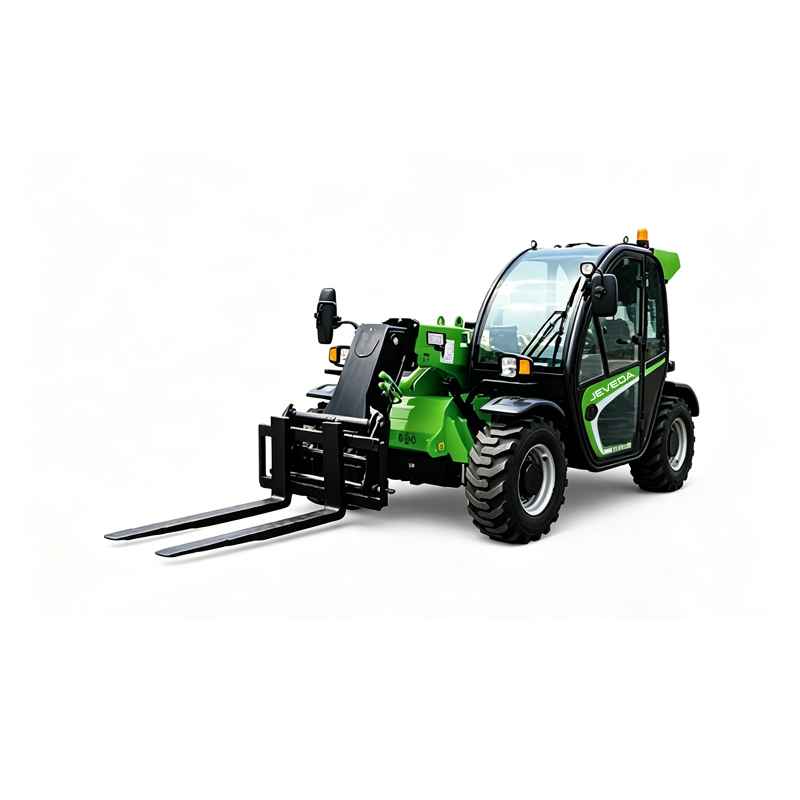
 JT625 Compact Telescopic Handler for Tight SitesA 2,500 kg compact telehandler with 5.95 m lift height, suited to urban sites, indoor warehousing and narrow passages.View Product →
When you compare telehandler vs Lull at the procurement stage, compare numbers. The brand label is not a capacity rating. The following data should be on the quote sheet.
A common mistake is to read the headline capacity and assume it applies everywhere. It does not. A telehandler’s load chart changes with boom angle, extension and attachment weight. The further the load is from the chassis, the lower the safe capacity.
Safety deserves its own line. Never lift people with a telehandler unless the machine and the platform are designed and rated for it. Never exceed the load chart. Never use the boom as a crane without the proper lifting point and rigging plan.
A good sales conversation should feel like a site survey, not a vocabulary test. Use these questions to move from a nickname to a specification.
A seller who can answer these questions is selling a machine, not a nickname. If the response is only “it is a Lull,” ask for the load chart. If a used machine is being offered, ask for the serial plate, service records, boom inspection and attachment compatibility.
You can also browse our telescopic handler range to see how compact, all-terrain and high-lift configurations compare in practice.
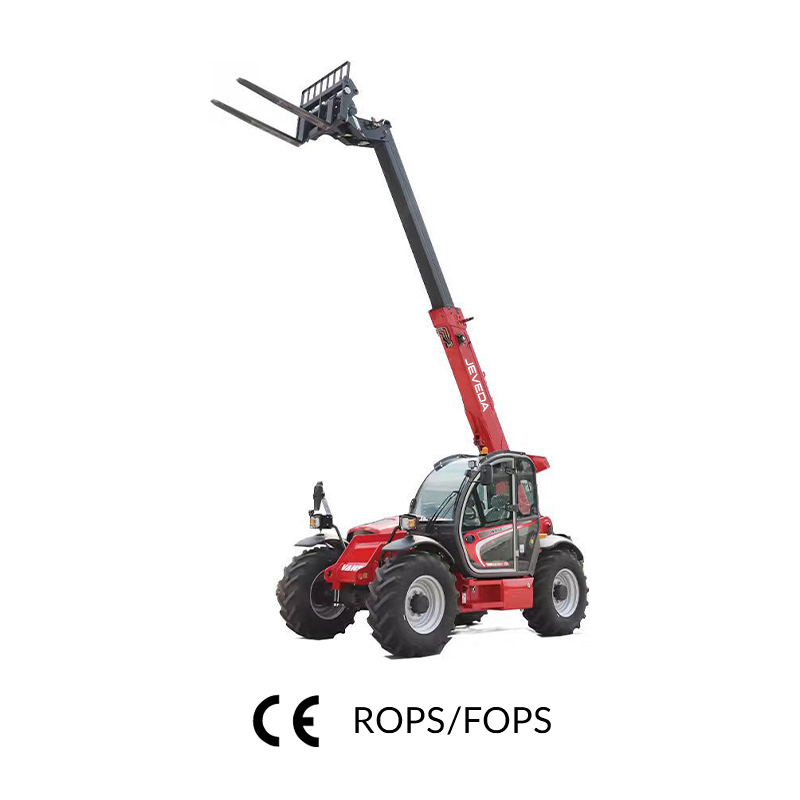 JT735 All-Terrain Telescopic Handler for Mixed TerrainA 3,500 kg telehandler with 7 m lift height and four-wheel drive, offered for construction, farming and industrial logistics.View Product →
Compact telehandlers earn their place on urban sites, renovations and agriculture operations where access is tight and the load is moderate. All-terrain models handle mud, slopes and uneven surfaces with more confidence. Heavy-duty high-lift models are for repeated lifting at height, where capacity and stability cannot be compromised.
The best specification is the one that fits the site without forcing the operator to work around the machine. That is why we prefer to start with the task, the ground and the attachment, then choose the model.
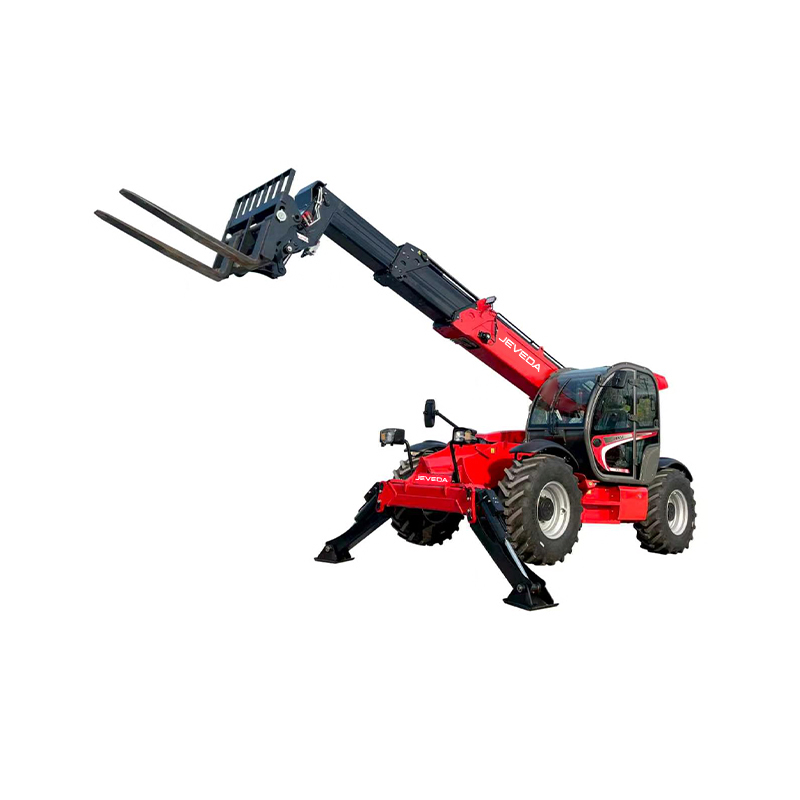
 JT1840 Heavy-Duty High-Lift Telescopic HandlerA 4,000 kg high-lift telehandler reaching 17.6 m height and 13.1 m outreach for construction, agriculture and mining work.View Product →
The telehandler vs Lull question is not really a rivalry. Lull is a name with historical weight; telehandler is the working category. The best buying decision comes from the job: the load, the height, the reach, the ground and the people who will operate and maintain the machine.
When the vocabulary is clear, the specification becomes clearer too. That is the practical value of separating a Lull from a telehandler: you stop shopping for a word and start choosing a machine that fits the work.
A telescopic handler, often called a telehandler, is one of the few machines that can lift, reach, place, load and carry on the same day without changing equip...
READ MOREThe Agricultural Telehandler: One Machine, One Whole Season of Jobs A working guide to choosing, equipping and living with a telehandler on a real farm — writt...
READ MOREMachine Guide · Electric Equipment Electric Telehandlers: The Quiet Power Behind Modern Job Sites Battery-powered lift machines have quietly moved from trade-s...
READ MORE
information
info@jevedamachinery.com
+86-571-86888355
No.1, Road One, Xindeng New District, Fuyang, Hangzhou, Zhejiang 311404, P.R.China
 China Compact Telescopic Forklift Manufacturers
 English
 русский
 Español
 Português
 Deutsch
 中文简体