en
Machine Guide · Electric Equipment
Battery-powered lift machines have quietly moved from trade-show stands into real work. What actually changes when the engine disappears, and how do you judge whether an electric telehandler belongs on your next job?
For a long time, an electric telehandler was a compromise you accepted only when a site banned diesel outright. Owners put up with short runtimes, long charging windows and a machine that felt heavier than it needed to be. That trade-off has narrowed year by year, and four pressures have pushed the category forward.
None of this makes diesel obsolete. It simply means the electric option is now judged on productivity rather than sympathy.
The lift itself is unchanged. Hydraulic cylinders, boom sections and attachments work exactly as they always have. What changes is how the pump receives its power, and how that energy is stored and replenished.
The engine was never the point. Lifting the load safely, and being able to do it again next hour, is the point.
An electric telehandler is not universally better. It suits some work beautifully and others badly, and the honest starting point is a week of real figures: how many hours the machine runs, how many of those hours it sits idle, what it lifts and how high, and where it can safely stand while charging.
| What to compare | Diesel telehandler | Electric telehandler | What it means on site |
|---|---|---|---|
| Power delivery | Torque builds with engine speed | Full torque from zero speed | Finer control when placing loads |
| Noise at the operator | Engine, fan and exhaust dominate | Drive and hydraulic noise only | Less fatigue, easier communication, night work possible |
| Emissions | Tailpipe gases and after-treatment | No tailpipe emissions | Usable indoors, in tunnels, cold stores and food plants |
| Refuelling | Fuel runs and on-site storage | A planned charging window | Logistics planning replaces fuel logistics |
| Maintenance | Oil, filters, coolant, after-treatment | Fewer fluids, battery health checks | Shorter service stops, different skills |
| Best fit | Long shifts, remote sites, continuous heavy duty | Fixed sites, urban work, short and repeated cycles | Match the machine to the day, not to the brochure |
If your machine works a nine-hour shift at full effort on a site with no power supply, diesel still answers the question. If it works four hours, idles for two and never leaves the same postcode, electricity usually wins comfortably.
Electrification scales down gracefully. Short boom cycles, moderate loads and tight yards are exactly the duty cycle a battery handles well, which is why compact machines led the way into real jobs rather than demonstrations.
The JT625-EV follows that logic: a narrow, compact chassis built around an electric drivetrain, intended for work where a diesel unit would be noisy, unwelcome or simply oversized. It is the kind of machine you drive between rows, along a finished facade, or through an opening that a full-size handler would never reach.
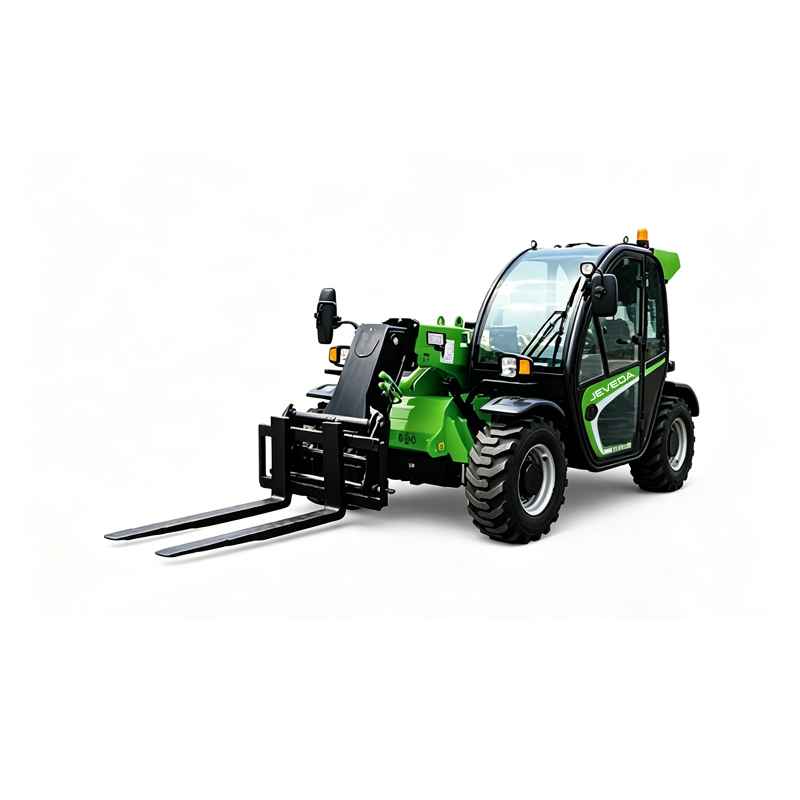 JT625-EV Compact Electric Telescopic HandlerLithium-ion, zero-emission compact telehandler with 2,500 kg rated load and 5.95 m lift height, suited to indoor, row, and restricted-access work.View Product →
Compact does not mean limited. What you lose in maximum reach you tend to gain in access, visibility, and in the number of hours per day the machine is actually allowed to work.
Not every industry asks the same thing of a handler, but the pattern we see most often looks like this.
Most compact electric handlers are charged overnight, which means the specification question is not how fast the pack fills but whether the pack matches a full working day at your duty cycle. Ask for a consumption figure measured on realistic work, not on a smooth test track. Operators also benefit from a short charging habit mid-shift: a plugged-in machine during a lunch break returns more usable hours than a rushed top-up at the end of the day.
Battery capacity is only half the story. Charge rate, connector type and where the charger physically sits on your site decide how often the machine actually gets plugged in.
A charge point is a site facility, not an accessory. Cable routing, weather protection, fire clearance and the walking distance to the working area need to be settled before delivery day, not after it.
Cold weather deserves its own line in the plan. Capacity drops in low temperatures, and a machine that performs well in October may need a longer charging window in January.
Purchase price is the easiest number to compare and the least useful on its own. The lines that decide whether electrification pays back are usually these:
The strongest business case is rarely fuel savings alone. It is the extra hours the machine is permitted to work in noise-restricted streets, and the contracts it can accept without a special permit.
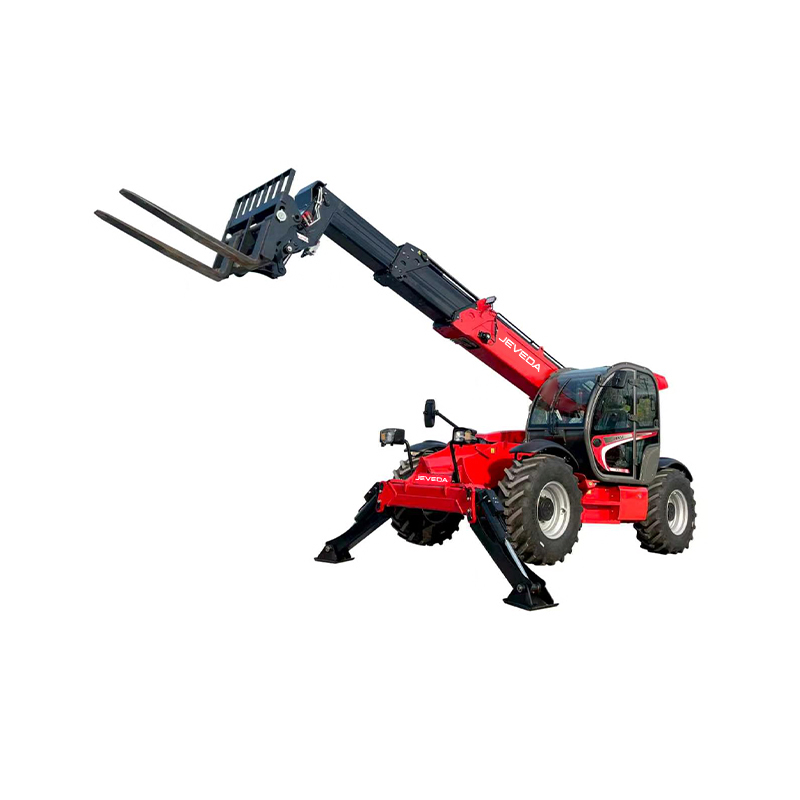
Honesty matters more than enthusiasm here. Continuous heavy duty, remote sites with no power supply, multi-shift operations and long reach at high capacity remain diesel territory for now. A rough-terrain machine such as the JT735 exists precisely because those jobs have not gone away, and no responsible supplier should pretend otherwise.
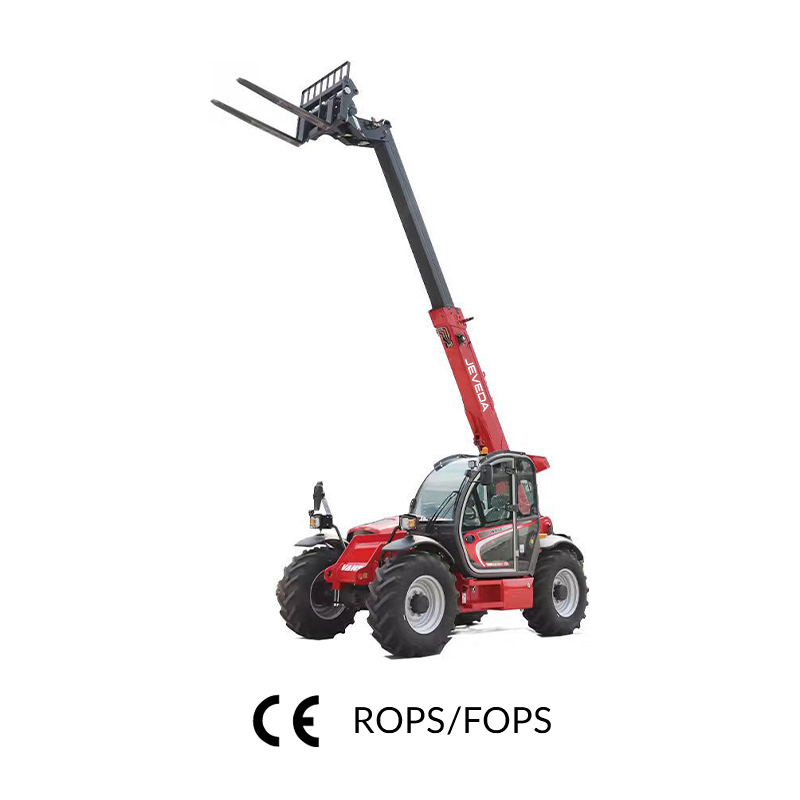 JT735 All-Terrain Telescopic Handler3,500 kg, 7 m all-terrain telehandler with 4WD, multiple steering modes and diesel engine options for heavy, remote or multi-shift work.View Product →
The useful question is not which technology is better, but which one fits the next three years of work you have actually been contracted to deliver.
After enough site visits, the decision process tends to settle into four steps.
Battery-electric handlers arrived as a niche product for emission-sensitive sites, and they have grown into a normal specification choice for compact, repetitive and indoor work. The practical answer is rarely all-electric or all-diesel. Most working fleets end up with a mix, chosen job by job. If you want to see how the full line fits together, our after-sales and service support team can walk through duty cycles with you before a machine is even specified.
 Jeveda Telescopic Handler RangeFive telehandler families from 2,500 kg compact and electric units to 4,000 kg high-lift models, helping match powertrain and reach to the job.View Product →
Start with the work, then choose the powertrain. That order has never produced a bad machine decision.
Telehandler vs Lull: The Name on the Site, the Machine in the Yard On almost any construction site, someone will call a telescopic handler a Lull. The word tra...
READ MOREThe power system of the multi-directional forklift 3.0-4.0T is widely praised by users for its high efficiency and stability. The power system of this forklift ...
READ MOREThe Agricultural Telehandler: One Machine, One Whole Season of Jobs A working guide to choosing, equipping and living with a telehandler on a real farm — writt...
READ MORE
information
info@jevedamachinery.com
+86-571-86888355
No.1, Road One, Xindeng New District, Fuyang, Hangzhou, Zhejiang 311404, P.R.China
 China Compact Telescopic Forklift Manufacturers
 English
 русский
 Español
 Português
 Deutsch
 中文简体