en
A mini excavator is a compact, tracked digging machine that typically weighs 1 to 3 tons and fits through gates, doorways and alleys as narrow as 70 to 150 cm. It is the right choice for trenching, foundation digging, stump removal, drainage work and light demolition on sites where a full-size machine would not fit or would damage the surface. The correct model depends mainly on three things: how deep the hole must be, how wide the access path is, and how heavy the trailer or truck that carries it can be.
Productivity explains the appeal. A laborer with a shovel moves roughly 0.5 to 1 cubic meter of soil per hour, while a 2 to 3-ton machine in loose ground can shift 8 to 15 cubic meters per hour. That ratio turns a three-day hand-digging job into an afternoon and explains why compact diggers have spread from construction yards into orchards, greenhouses, village roads and private gardens.
The undercarriage carries the machine on two rubber or steel tracks. Rubber tracks, usually 180 to 300 mm wide on small models, spread the weight so that ground pressure stays near 25 to 35 kPa, lower than the pressure of an adult standing on a lawn, which is why they can cross finished paving and turf with little marking. Steel tracks give better grip on rock, demolition debris and muddy slopes but are harder on hard surfaces. A small dozer blade at the front stabilizes the machine during digging and doubles as a tool for leveling and backfilling.
Above the tracks sits a rotating upper structure holding the engine, hydraulic pump, operator seat and the boom-arm-bucket assembly. A small diesel engine of 9 to 25 kW drives a hydraulic pump that works at roughly 180 to 250 bar, and that fluid pressure powers every cylinder and travel motor. Boom and arm sections are generally welded from high-strength structural steel plate, and the pins and bushings at each joint are the parts that wear first, so regular greasing is the cheapest insurance an owner can buy.
Many modern units use a zero tail swing layout, in which the rear of the upper body stays inside the track width while rotating. An operator can then dig along a wall, fence or parked vehicle without the counterweight striking it, a feature that matters in dense urban lots and narrow farm lanes.
Weight class is the quickest way to judge capability. Micro machines under 1.5 tons squeeze into backyards and indoor rooms, mid-sized compact units around 2 to 3 tons handle most utility and agricultural digging, and heavier models between 4 and 8 tons belong to commercial earthmoving. Digging depth grows with weight, but so do transport costs and the width of the gap the machine requires.
| Weight class | Digging depth | Machine width | Typical applications |
|---|---|---|---|
| Around 1 ton | 1.5 to 2 m | 0.7 to 1.0 m | Villa gardens, courtyards, indoor demolition, narrow lanes |
| Around 2 tons | 2.2 to 2.8 m | 1.1 to 1.3 m | Cable trenches, small ponds, orchard work, municipal repairs |
| Around 3 tons | 2.8 to 3.3 m | 1.4 to 1.6 m | Footings, drainage lines, farm ditches, light site preparation |
| 5 to 8 tons | 3.5 to 4.2 m | 1.8 to 2.2 m | Commercial excavation, deep sewer lines, breaker work |
A 1-ton machine rides on a light single-axle trailer behind an ordinary pickup, whereas a 3-ton unit plus trailer approaches 4,500 kg of total towed weight, and that difference alone decides the vehicle a buyer needs.
Jeveda is a Chinese manufacturer of small construction machinery and logistics equipment, with telehandlers, skid loaders, forklifts and compact diggers in its catalog. Positioned among the China cost-effective compact digger manufacturers, it splits its excavator line into light, general-purpose and heavy-duty tiers, which makes a convenient real-world example of how a lineup maps onto jobs.
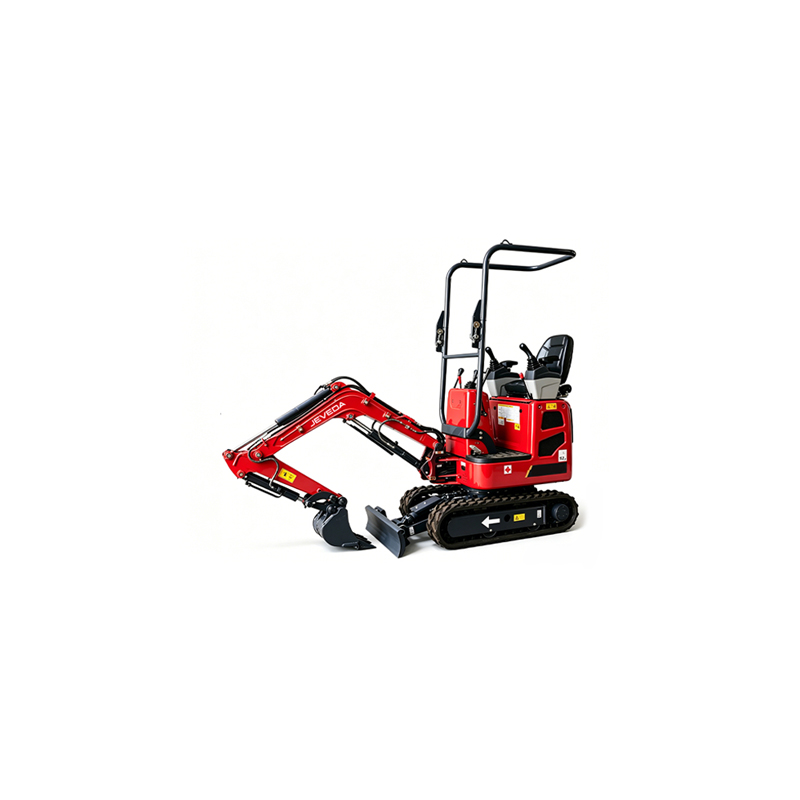
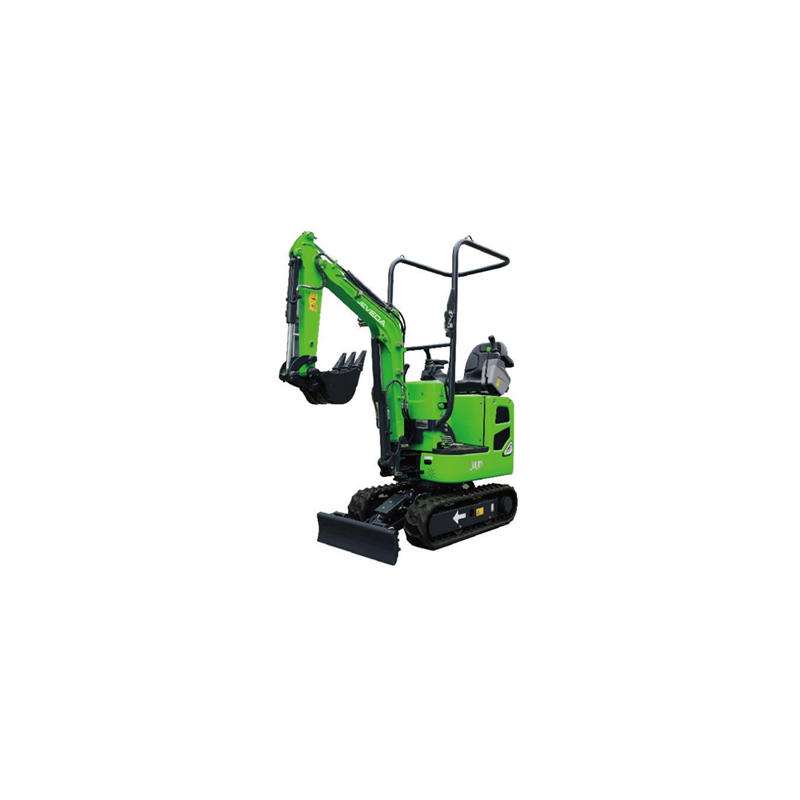
The JE10 is the light-weight model, noted for flexibility and maneuverability, with a maximum load capacity of 1,000 kg. Its small footprint suits private villa grounds, courtyard renovation and alleys where wall clearance is measured in centimeters. Garden contractors who spend most of their week on residential plots tend to value this kind of agility more than extra digging depth.
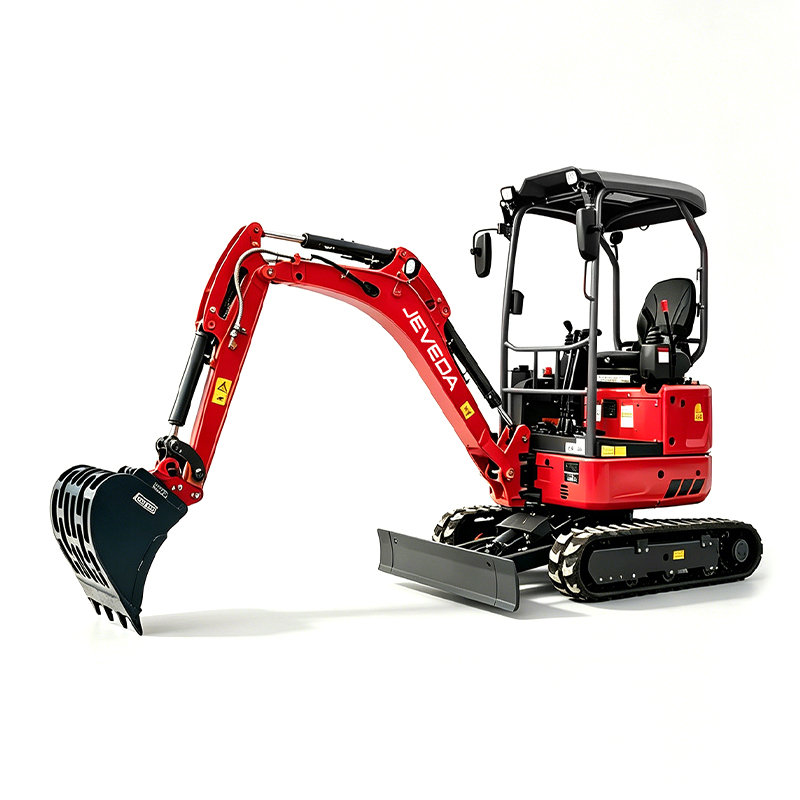
The JE19U is the general-purpose model, rated for a maximum load capacity of 2,000 kg and widely used on construction sites, in municipal engineering and in agricultural operations. One machine of this class can trench for pipes on Monday, clear a drainage channel at a farm on Wednesday and load spoil into trucks on Friday, a mixed schedule that keeps utilization high and makes the purchase easier to justify.
The JE35U is the heavy-duty option, with a maximum load capacity of 3,000 kg, an extensive operating range and strong adaptability to varied terrain. Its zero tail swing design lets the operator work beside walls and obstacles with confidence, and the combination of reach and compact turning suits construction, agriculture and industrial yards alike.
Orchards are a textbook case. Rows of fruit trees are often spaced 3 to 4 meters apart, which excludes tractors with large backhoes but welcomes a narrow tracked machine that can dig planting holes, trench irrigation lines and bury fertilizer without scraping trunks. Greenhouse builders and vineyards value the same slim profile, and the low ground pressure helps protect soil structure that took years to build.
Cities and towns use these machines for work that must happen without closing a whole street. Water-pipe repairs, cable laying, curb replacement and manhole adjustments can be handled from a single lane, and a 2-ton unit loads onto a small truck in minutes. Inside buildings, a micro model with electric or low-emission power can break out floor slabs, dig service trenches and remove debris through a standard doorway, jobs that once demanded days of manual labor and rented jackhammers.
Rural property owners find that the machine's usefulness extends well beyond a single project. Pond cleaning, fence-line clearing, road-edge ditching, manure handling and tree-stump extraction fill the calendar once the equipment sits in the shed, and each task that would have cost an operator fee of $50 to $120 per hour now costs mostly fuel and a little grease.
A standard digging bucket is only the starting point. Narrow trenching buckets of 200 to 300 mm cut utility channels with minimal spoil, wide cleanup buckets of 800 mm or more grade and level, and a tilting bucket angles sideways by about 45 degrees to shape slopes without repositioning the whole machine. A hydraulic thumb turns the bucket into a gripping tool for rocks, logs and demolition waste.
Powered tools add further range. An auger drive bores post and planting holes in minutes, a hydraulic breaker splits concrete slabs and frozen ground, and a compaction plate firms backfill in trenches. Quick couplers allow the operator to change tools in under a minute, which is a significant productivity gain on a job that alternates between digging and breaking. Hydraulic flow rate, typically 20 to 50 liters per minute on this size of machine, sets which attachments will perform properly, so matching flow to tool specification prevents a lot of frustration.
Prices vary widely by origin, engine brand and equipment level. New 1 to 3-ton units built in Asia are commonly quoted ex-factory at roughly $4,000 to $15,000, while machines carrying established Western or Japanese badges often start above $25,000 for a comparable size. Shipping, import duties and a spare-parts kit add 10 to 25 percent for overseas buyers, so the landed price deserves as much attention as the quoted one.
Daily operating costs stay modest. Fuel consumption for this class runs around 2 to 4 liters of diesel per working hour, engine oil and filters need replacing every 250 hours, and hydraulic oil changes are due somewhere between 1,000 and 2,000 hours. Rubber tracks typically last 1,000 to 1,500 hours on mixed ground and cost a few hundred to a couple of thousand dollars to replace. With good greasing habits, a well-built compact digger can reach 5,000 to 8,000 working hours before major overhaul.
Buying from a source that controls development, production and after-sales support under one structure can shorten the path from order to spare part. An integrated industry and trade mini excavator factory quotes without a stack of intermediaries, and a contractor whose machine stops working during a paid job benefits directly from quick access to seals, hoses, pins and tracks.
Start by measuring the narrowest point on the route to the work area, then choose a machine at least 10 cm narrower. Compare the digging depth on the specification sheet with the deepest trench planned, remembering that sheet figures are measured in ideal conditions and real-world reach is often 5 to 10 percent shorter. Lifting capacity at full extension matters too, since it determines how safely a pipe section or concrete block can be handled at arm's length.
Operator comfort is easy to overlook until a long shift exposes it. Seat position, joystick feel, visibility to the bucket tip and the smoothness of combined boom and arm movements all come from hydraulic tuning and ergonomic layout. Jeveda's research team consists of engineers with more than 30 years of experience in excavators, loaders and forklifts, and its design work pays attention to overall machine layout, appearance, ergonomics and hydraulic system optimization, which are the same qualities that separate a tiring machine from a pleasant one over thousands of hours.
Service access deserves a physical inspection as well. Daily grease points, the air filter and the fuel filter should be reachable without removing panels, and the engine cover should open wide enough for a technician to work. A machine that is simple to maintain will actually receive maintenance, and that habit is what protects resale value.
Environmental rules in many regions now restrict diesel exhaust and noise on urban sites, in tunnels and inside buildings. Battery-powered compact diggers produce no local emissions and operate at noise levels several decibels below a diesel unit, which allows evening and indoor work that would otherwise face complaints or bans. Charging overnight from a standard industrial supply covers a typical 4 to 6-hour work block for lighter models, and swapping to a larger battery or a hybrid arrangement extends that window.
Miniaturization and electrification have become a defining direction for construction machinery, and Jeveda has focused its development on small construction machinery and forklifts built for that shift, aiming to become a competitive global supplier of complete compact-equipment solutions. Buyers who expect to work in restricted zones within the next five to ten years have a practical reason to look at the electric option now, since lower fuel and maintenance spending can partly offset a higher purchase price over the machine's life.
Mini skid steer loaders excel in narrow spaces for material handling, excavation and landscaping. Compact yet powerful, they are more flexible and cost-effectiv...
READ MOREA telescopic handler, often called a telehandler, is one of the few machines that can lift, reach, place, load and carry on the same day without changing equip...
READ MOREThe power system of the multi-directional forklift 3.0-4.0T is widely praised by users for its high efficiency and stability. The power system of this forklift ...
READ MORE
information
info@jevedamachinery.com
+86-571-86888355
No.1, Road One, Xindeng New District, Fuyang, Hangzhou, Zhejiang 311404, P.R.China
 China Compact Telescopic Forklift Manufacturers
 English
 русский
 Español
 Português
 Deutsch
 中文简体